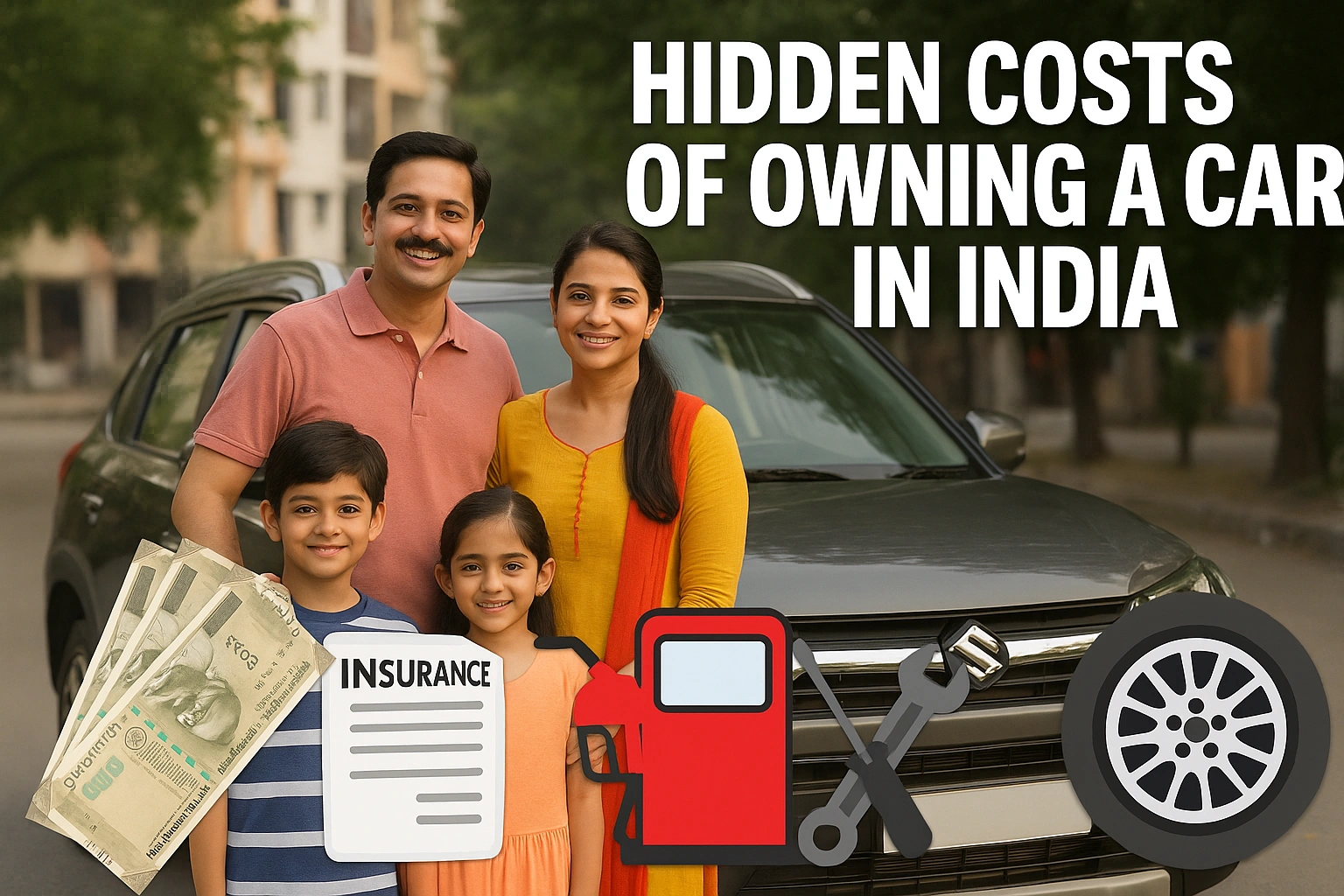
For a middle-class Indian family, buying a car is often one of the biggest financial milestones. It’s more than a vehicle — it’s a symbol of progress, comfort, and lifestyle.
But here’s the truth most buyers miss: the on-road price is just the beginning. Owning a car comes with many hidden and recurring costs that add up to lakhs of rupees over the years. Families often realize this only after the purchase, when EMIs, insurance, fuel, and maintenance start eating into the monthly budget.
This article breaks down the real cost of car ownership in India, with examples and calculations that every middle-class family must check before buying.
🏷️ One-Time Hidden Costs After Buying a Car
When you buy a car, you don’t just pay the “ex-showroom price”. The on-road price itself includes several charges, and there are some additional one-time costs most families forget:
- Registration & RTO Fees
- Road tax and registration charges vary by state.
- For a ₹10 lakh car, expect ₹1–1.5 lakh extra in taxes.
- Extended Warranty
- Most manufacturers provide 2–3 years of warranty.
- Families often buy extended warranties (₹15,000–40,000) for peace of mind.
- Essential Accessories
- Seat covers, floor mats, reverse parking camera, infotainment upgrades.
- Costs easily ₹20,000–50,000.
- FASTag & First Fuel Tank
- While smaller, these add ₹2,000–5,000 initially.
📌 Reality Check: A ₹10 lakh car can become ₹12 lakh on-road once these costs are included.
🔄 Recurring Annual Costs
The biggest mistake families make is calculating only EMI + fuel. In reality, recurring yearly costs look like this:
- Insurance Renewal
- First-year insurance is included, but premiums rise annually.
- Over 5 years, a mid-segment car may cost ₹1.5–2 lakh in insurance.
- Fuel Cost
- For petrol cars (12–15 kmpl), fuel can be ₹1–1.5 lakh/year depending on usage.
- For CNG or hybrids, it’s lower but still significant.
- Servicing & Spare Parts
- Routine servicing costs ₹6,000–12,000/year.
- Unexpected part replacements (clutch, suspension) can add extra ₹10,000–50,000.
- Pollution Certificate (PUC)
- A small but mandatory expense (₹300–500 every 6 months).
⚠️ Maintenance Traps Most Families Forget
- Tyre Replacement
- Tyres last 40,000–50,000 km.
- Replacing 4 tyres = ₹25,000–40,000.
- Battery Replacement
- Petrol/Diesel car batteries: ₹5,000–10,000 every 3–4 years.
- Hybrid/EV batteries: much higher (₹3–7 lakh).
- Accidental Repairs
- Even with insurance, deductibles and non-covered parts cost ₹5,000–20,000 per accident.
🏙️ City vs Small Town Car Costs
- Parking Charges in Metros: Families in Delhi, Mumbai, Bangalore may spend ₹2,000–4,000/month on parking.
- Tolls: Regular highway users can easily spend ₹10,000–20,000/year.
- State-wise Fuel Prices: Fuel in Mumbai or Hyderabad can be ₹5–8/litre costlier than in Delhi.
📊 Real Example: 5-Year Cost of a ₹10 Lakh Petrol Car
Let’s calculate the Total Cost of Ownership (TCO) for a middle-class family.
| Expense | Amount (Approx) |
|---|---|
| On-road price (with RTO + insurance) | ₹12 lakh |
| Insurance renewals (5 yrs) | ₹2 lakh |
| Fuel (12 kmpl, 60,000 km, petrol @ ₹100/litre) | ₹5 lakh |
| Servicing & repairs | ₹80,000 |
| Tyres + battery | ₹50,000 |
| Parking & tolls (avg) | ₹50,000 |
| Total (5 years) | ₹20.8 lakh |
👉 Families think they’re buying a ₹10 lakh car, but the real cost is over ₹20 lakh in 5 years!
💡 How Families Can Reduce Costs
- Choose Fuel-Efficient Cars
- Hybrids, CNG, or high-mileage petrol cars save lakhs in fuel.
- Compare Insurance Every Year
- Don’t renew blindly with the dealer. Use online comparison sites.
- Follow Preventive Maintenance
- Timely oil changes and servicing avoid costly breakdowns later.
- Drive Smart
- Avoid rash driving, maintain tyre pressure → saves fuel & tyre life.
- Plan Parking & Usage
- If you live in a metro with expensive parking, reconsider if you need a car or can manage with shared mobility.
✅ Conclusion
For middle-class families, a car is not just a one-time expense — it’s a long-term financial journey. Over 5 years, the hidden and recurring costs often make the car twice as expensive as the sticker price.
So before buying, calculate the Total Cost of Ownership (TCO) — not just the EMI. This way, you can choose a car that fits your lifestyle, fuel budget, and long-term financial health.


